
How to Find Philadelphia County Marriage and Divorce Records
Start by splitting the two record types, because they live in different offices. Marriage licenses and marriage records run through the Philadelphia Register of Wills, which also serves as Clerk of the Orphans' Court, at City Hall, Room 180. Divorce is a Family Division matter at the Court of Common Pleas, and the First Judicial District links a Divorce, Custody, and Protection from Abuse docket search through its case hub. So a marriage record request goes to the Register, while a divorce docket search goes to the court, even though both touch family life.
Before you request anything, gather names and dates. For a marriage record, the names before marriage and the date or approximate date help the office find the file. For a divorce, a case number or party name drives the docket search, with the caveat that family records show limited information online. The Register of Wills services page is shown below.
The screenshot is the Philadelphia Register of Wills services page.
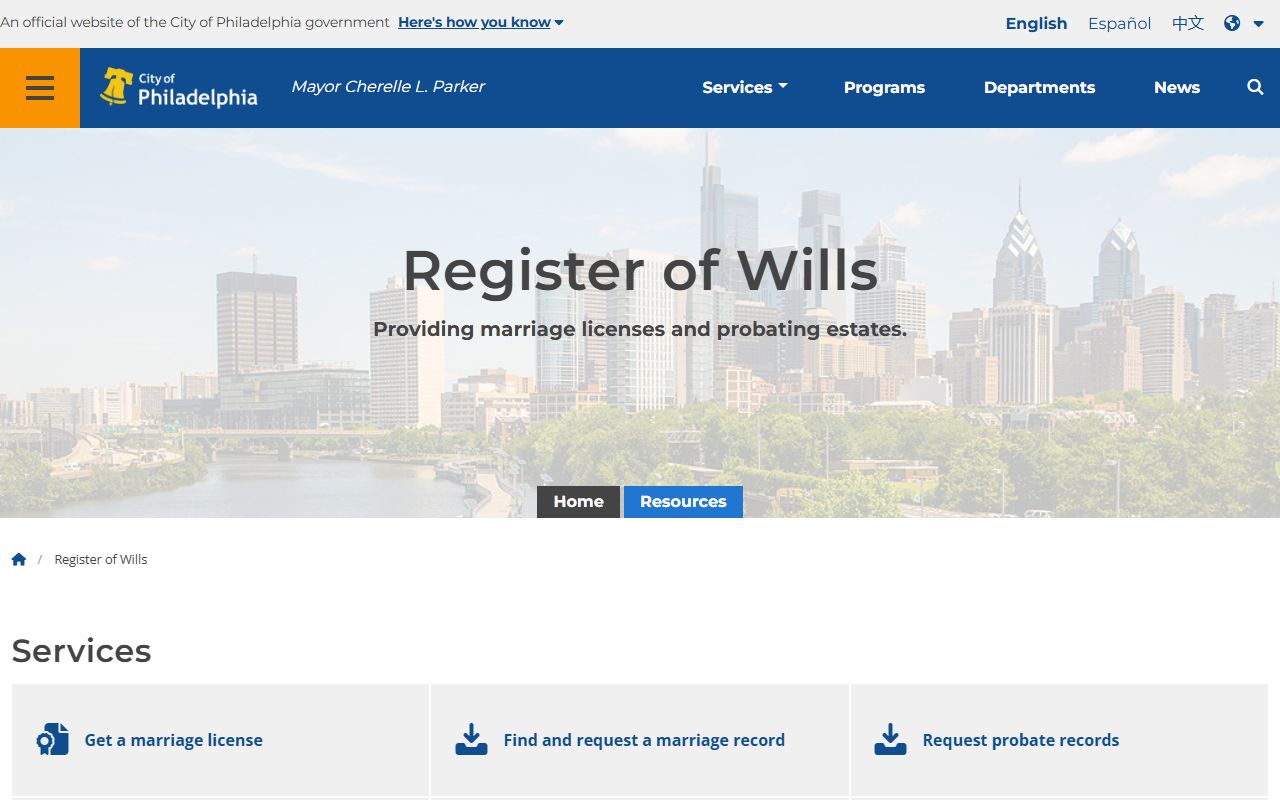
It is the official starting point for marriage licenses, marriage records, and probate.
Marriage Licenses Through the Register of Wills
A marriage license is the document a couple needs before a wedding, and in Philadelphia the Register of Wills issues it as Clerk of the Orphans' Court. The office handles applications, sets the current fee, and explains the steps. Pennsylvania law governs who may solemnize a marriage and how the license becomes the official record afterward, and the Register publishes a marriage policies document for local guidance. Because policies and appointment options change, the safest path is to confirm the current process with the office before you go.
After the ceremony, the completed license is returned and becomes the recorded marriage. That is why the same office that issues the license also keeps the marriage record. A couple who marries in Philadelphia will find their record here, not at a separate state vital-records office, because Pennsylvania keeps marriage records at the county that issued the license. This is a key difference from birth and death records, which run through the state Department of Health. For marriage, the county Clerk of the Orphans' Court is the keeper, so a Philadelphia marriage stays a Philadelphia record.
Marriage Records Since 1915
The Register of Wills keeps Philadelphia marriage records dating back to 1915. That long span makes the office useful for legal needs and for genealogy. Statewide, county Clerks of the Orphans' Court have issued marriage licenses since 1885, and each county keeps the records for the licenses it issued, so an older Philadelphia marriage is a Philadelphia record. For records older than the office's holdings, archival research may be needed rather than a routine request.
To get a marriage record, the office uses an official request form. You provide the license number if known, the names before marriage, the date or an approximate date, and your contact and mailing information, along with the research fee. The request can be made by mail or in person as the form directs.
How to Apply for a Marriage License
The application is a short process, but the details matter, so follow the office's current instructions. The steps below outline the general path in Philadelphia.
- Contact the Register of Wills Marriage License Department at 215-686-2233 or use the official city service page.
- Follow the current appointment or online instructions the office provides.
- Bring the identification and application information the office requires.
- Pay the current license fee listed by the office.
- Observe Pennsylvania waiting-period and validity rules before the ceremony.
- Make sure the officiant or self-uniting requirements are met.
- Return the completed license as directed so it becomes the official record.
Confirm current fees and waiting periods with the office, since local policy can change.
Marriage Record Request Form Fields
The marriage record request form asks for a handful of identifiers plus the fee. The table lists the fields and what each one needs, so you can gather the information before you fill it out.
| Field Label | Type | Required | Notes / Format |
|---|---|---|---|
| License number | Text | No | Provide if known |
| Name prior to marriage | Text | Yes | Names before the marriage |
| Date of marriage | Date | Yes | Use best known date if exact is unknown |
| Requester name | Text | Yes | Person requesting the record |
| Mailing address | Text | Yes | Where the record is returned |
| Money order | Payment | Yes | $15 research fee to Clerk of the Orphans' Court |
Marriage and Record Fees
The marriage record research fee is a set amount, while certified-copy and license fees are posted by the office. The table summarizes the known fees; confirm current amounts and accepted payment methods with the Register before you send anything, since fees can change and the office sets its own payment rules.
| Item | Amount |
|---|---|
| Marriage record research fee | $15 money order to Clerk of the Orphans' Court |
| Marriage license fee | Set by the office; confirm current amount |
| Certified copy | Posted fee; confirm with the office |
Do not rely on unofficial marriage sites for Philadelphia fees, since the Register of Wills sets the official amounts and accepts specific payment forms for each service.
Divorce in the Family Division
Divorce is not a Register of Wills matter. It is handled by the Family Division of the Court of Common Pleas, located at 1501 Arch Street. The First Judicial District links a Divorce, Custody, and Protection from Abuse docket search through its case hub. Filing a divorce means determining residency and jurisdiction, using the Family Division forms or a lawyer, paying the filing fee or requesting a fee waiver if eligible, serving the other party, and resolving property, support, custody, and grounds.
The process can run long, and the docket tracks it from the first filing to the final decree. Self-help is available through the First Judicial District forms and publications, and legal aid can help people who cannot afford a lawyer. The Court of Common Pleas page explains the Family Division's place in the court.
A few practical points help here. Philadelphia must have jurisdiction, which usually means a residency tie to the county. Family litigants should use the First Judicial District forms rather than generic statewide templates when local rules apply, since the court has its own procedures. Clerks can explain forms and filing steps but cannot give legal advice, so a contested divorce over property, support, or custody is the kind of case where an attorney or legal aid matters most.
Searching Philadelphia County Divorce Records
Divorce records are public at the docket level, but family court access is the most limited of any case type. Under court policy, remote access is generally restricted to dockets, orders, and opinions, while income statements, property inventories, medical records, and abuse-victim contact information stay confidential. So a divorce docket search shows the case exists and its major events, but not the sensitive documents behind it. The table lists the fields on the divorce, custody, and protection from abuse docket link.
| Field Label | Type | Required | Notes / Format |
|---|---|---|---|
| Case number | Text | Conditional | Best search if known |
| Party name | Text | No | Family remote access is limited |
| Docket type | Link / tab | Yes | Divorce, custody, or protection from abuse |
| Search | Button | n/a | Runs the docket query |
Certified Copies and Name Changes
For legal use, a certified copy is usually required, since an uncertified printout may not be accepted. Marriage record copies come from the Register of Wills, while divorce decree copies come from the Family Division or the court records office. Name changes can run through Common Pleas civil or family channels depending on the facts, and safety exceptions can affect publication and access. If a name change involves safety concerns, confidential identity information may be protected.
For court filings and copies beyond marriage and probate, see the Office of Judicial Records.
Legal Aid for Family Matters
Family cases can be hard to handle alone, and Philadelphia has strong civil legal aid. Community Legal Services and Philadelphia Legal Assistance help low-income residents with family, housing, and benefits issues. Philadelphia VIP offers pro bono representation, and the SeniorLAW Center serves older adults. The First Judicial District also publishes forms, local rules, and self-help resources for people without a lawyer.
Fee waivers, known as in forma pauperis, may be available for those who qualify, using the official court forms. For the office that holds marriage and probate records, see the Register of Wills, and for estate matters see Orphans' Court records.