
Court Records vs City Records
The single most useful fact about Philadelphia public records is that court files and agency files are governed separately. Court case records follow the Unified Judicial System's Case Records Public Access Policy. Records held by city and county agencies, such as contracts, budgets, and emails, follow the Pennsylvania Right-to-Know Law, which the City applies through its own open-records policy. So a court docket is not normally obtained through a Right-to-Know request, and an agency contract is not obtained through a court-record request.
This split decides where you start. For a court file, use the court portals and the Office of Judicial Records. For an agency record, file a Right-to-Know request with that agency's open-records officer. The rest of this page covers both paths, the steps, the fees, and how to appeal a denial.
The Pennsylvania Right-to-Know Law
The Right-to-Know Law, at 65 P.S. §§ 67.101 et seq., sets public access to Commonwealth and local agency records. It establishes request procedures, agency open-records officers, fee rules, and appeal rights, and the Office of Open Records administers it for many agencies. The law presumes agency records are public unless an exemption applies. The Office of Open Records procedural guidelines page is shown below.
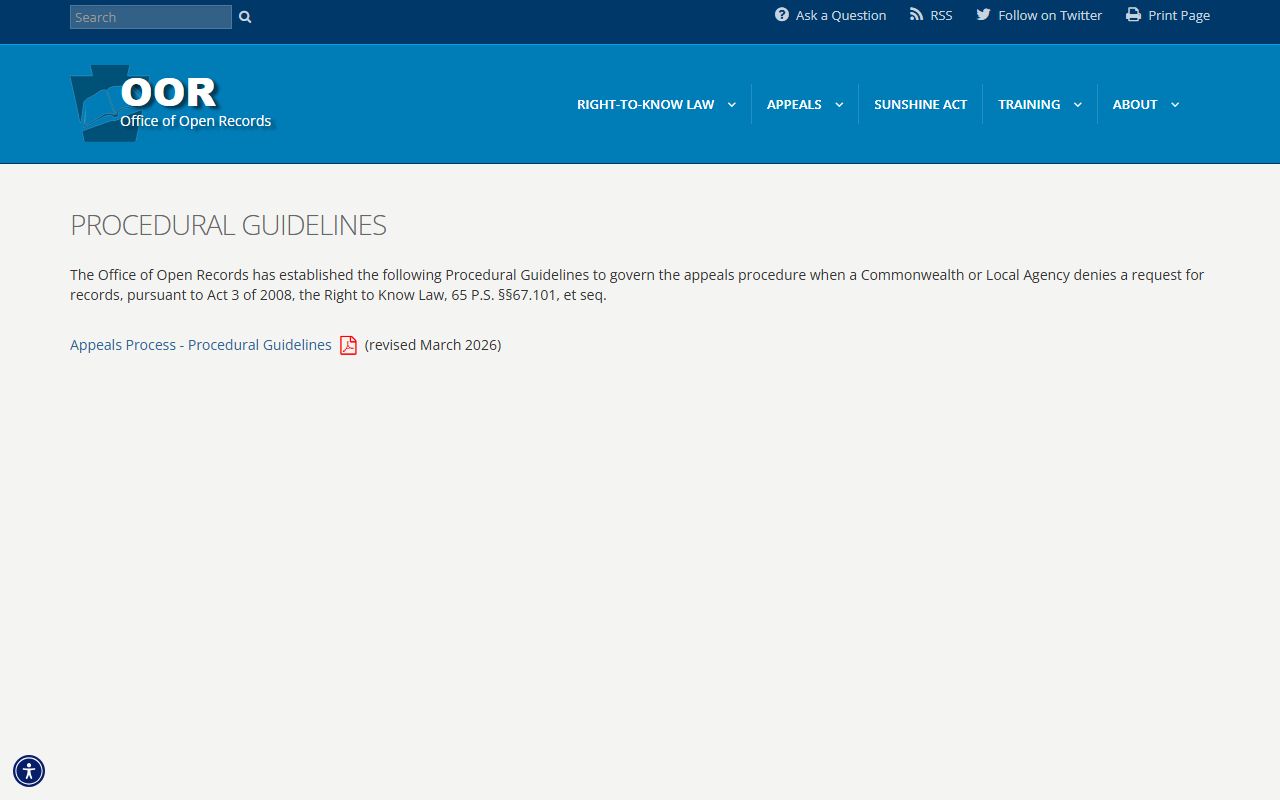
The guidelines explain how appeals work under the law, which matters when an agency denies a request. Court case files, by contrast, are handled under court policy rather than this law. The distinction is easy to miss because both are "public records" in everyday speech. But a request for a judge's docket goes to the court, while a request for a police department policy, a city contract, or an agency email goes to that agency under the Right-to-Know Law. Using the wrong channel is the most common reason a request stalls, so name the record type and the holder before you file.
The Court Case Records Policy
Court case records follow the Unified Judicial System's Case Records Public Access Policy at 204 Pa. Code § 213.81. It treats case records as open unless a law or rule restricts them, and it sets rules for requests, fees, confidential information, and remote access. Title 42 of the Pennsylvania statutes carries many of the court-structure and confidentiality provisions behind the policy, and that title is shown below.
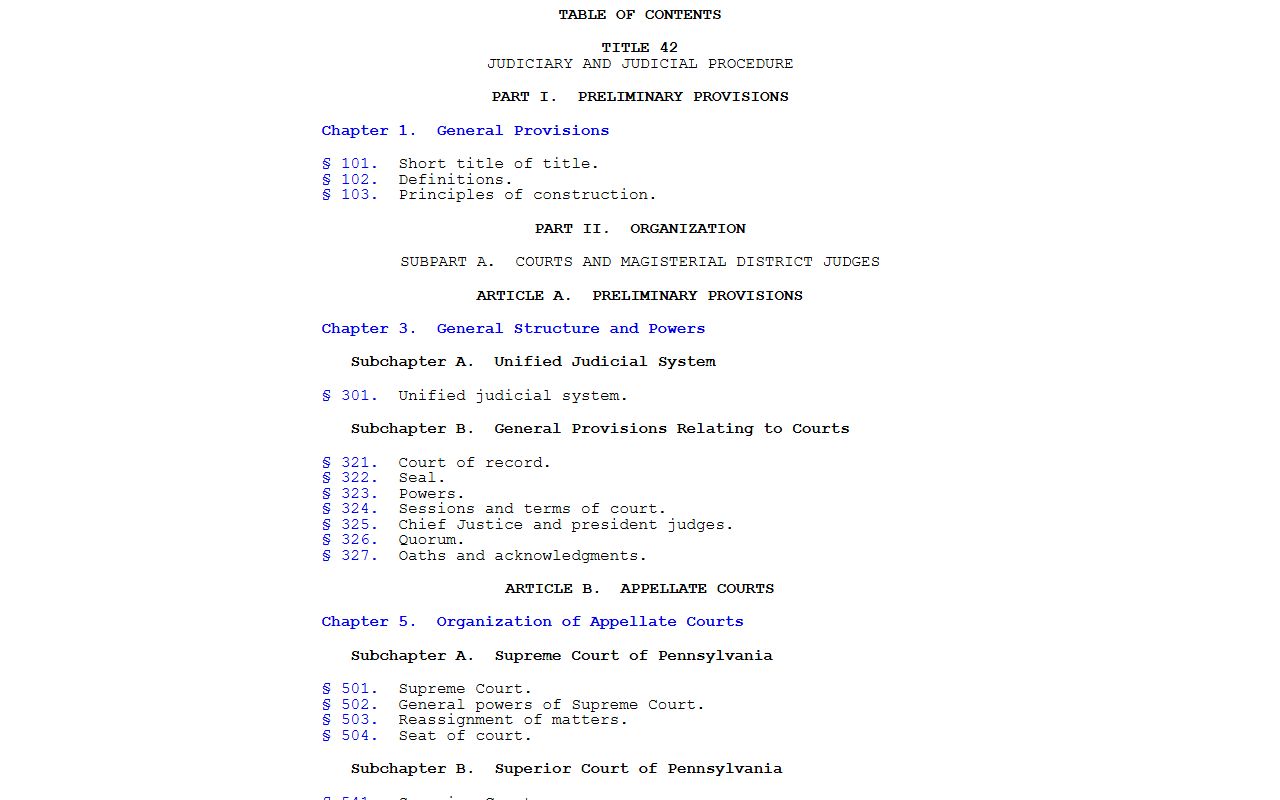
For a court file, a person can often make an oral request to the proper custodian for a simple record, while complex requests may need a written description. A written denial must explain its reason, and custodians must address delays. The Philadelphia County court records page covers the court side in detail, including how to correct a clerical error in a case file.
The City Open Records Policy
Philadelphia is a consolidated city and county, so most local agency records are City records under the Right-to-Know Law. The City publishes its own open-records policy that adopts the law for City records and names how to file with the City. The City open records policy page is shown below.
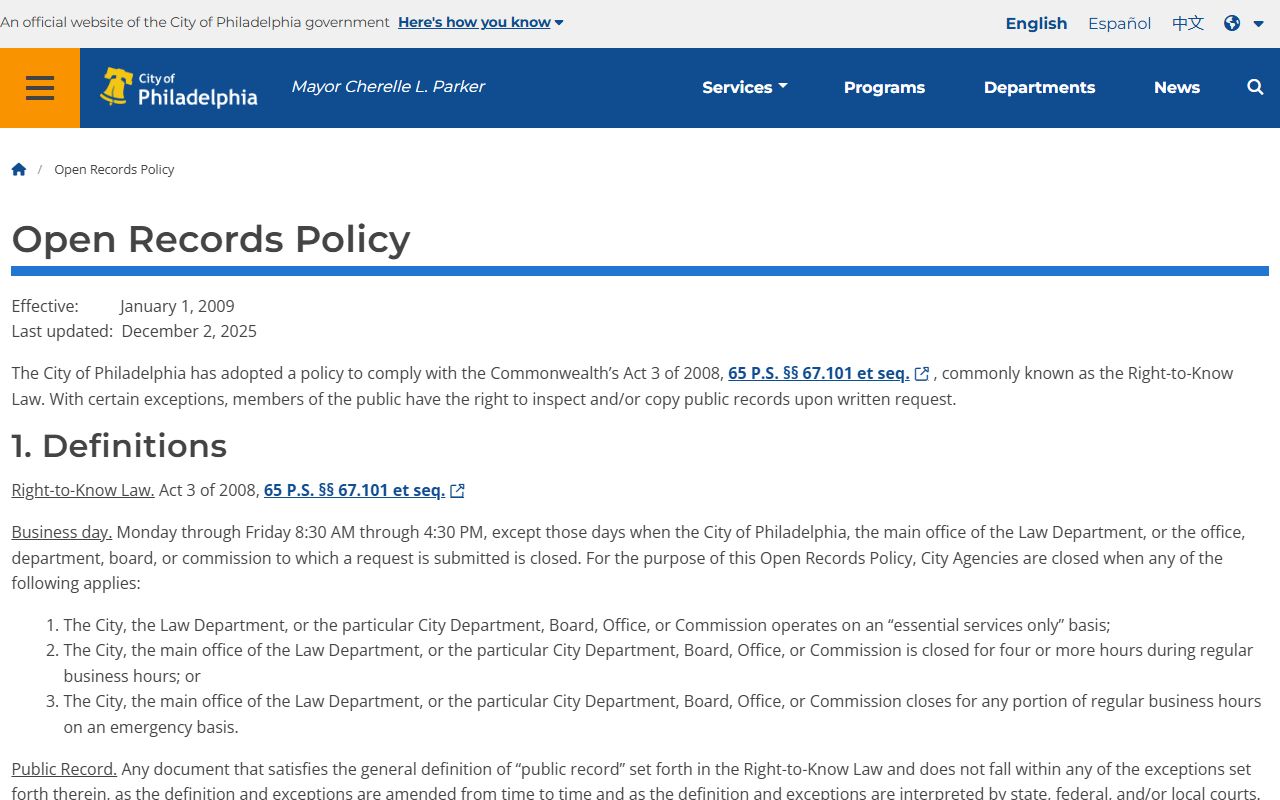
Because city and county functions are merged here, many records people think of as county records appear on City systems. That is why a Philadelphia public records request for a local agency usually runs through the City open-records process rather than a separate county office. The City names open-records officers to receive and route requests, and the same Right-to-Know exemptions apply, such as those protecting personal security, ongoing investigations, and certain personnel records. If you are not sure which department holds a record, the City open-records process can help direct the request, and a denial still carries the same free appeal to the Office of Open Records.
How to File a Public Records Request
A Right-to-Know request is more effective when it is specific. The steps below outline the general process for an agency record. For a court file, use the court custodian or portals instead.
- Identify the agency that holds the record, such as a City department.
- Describe the records you want as specifically as you can.
- Submit the request to that agency's open-records officer, in writing where required.
- Wait for the agency response within the statutory timeline.
- If denied, file a written appeal with the Office of Open Records.
A clear, narrow request is easier for an agency to fill and less likely to draw a fee estimate or a partial denial. Asking for a specific document or a defined date range works far better than a broad request for everything on a topic.
Right-to-Know Request Fields
A Right-to-Know request asks for a few core details so the agency can identify and route it. The table lists the fields a typical request includes.
| Field Label | Type | Required | Notes / Format |
|---|---|---|---|
| Requester name | Text | Yes | Person making the request |
| Contact information | Text | Yes | For the agency response |
| Records requested | Text | Yes | Describe the records with specificity |
| Format preference | Choice | No | Paper or electronic copies |
| Agency / open-records officer | Text | Yes | The agency that holds the record |
Appealing a Right-to-Know Denial
If an agency denies a request, the Office of Open Records hears the appeal. The appeal must be in writing, it carries no fee, and you do not need an attorney. You generally must file within 15 business days of the agency's response mailing date or a deemed denial. The Office of Open Records appeal page is shown below.
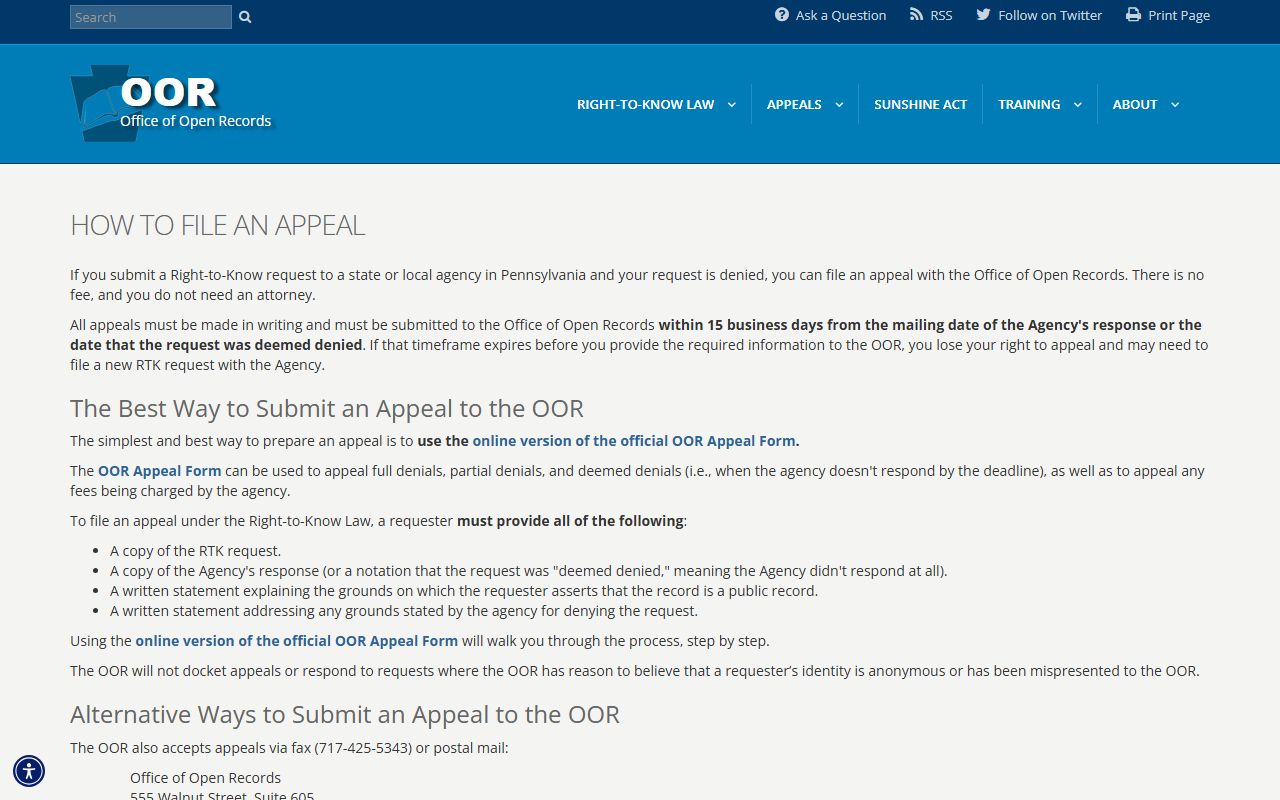
This appeal path applies to City, county, and agency records. Court case-record denials follow the court policy's own review procedures rather than the ordinary Office of Open Records path, which is one more reason to identify the record type before you start. The no-fee, no-attorney design is meant to keep the appeal open to ordinary people, not just lawyers. If the Office of Open Records sides with you, the agency must produce the records or appeal further. Keeping a copy of your original request and the agency's response makes the appeal easier, since the office reviews what was asked and what was refused.
Public Records Fees
Fees depend on the record and the system. Viewing a court file at the courthouse should be free under the court policy, while copies carry charges. Right-to-Know duplication fees follow the Office of Open Records fee structure. The table summarizes the picture; confirm current amounts with the office holding the record.
| Item | Amount |
|---|---|
| View court records at the courthouse | No charge under 204 Pa. Code § 213.81 |
| Right-to-Know duplication fee | Per the Office of Open Records fee structure |
| Court copy or certified copy | Posted fee; confirm with the office |
| Office of Open Records appeal | No fee |
Confidential Court Information
Even open systems protect certain data. Court policy separates confidential information, such as Social Security and driver's license numbers, from confidential documents, such as medical or financial source records. Filers must keep protected identifiers out of public filings and certify their compliance. Criminal-history dissemination follows its own statutes, and juvenile, mental health, and family records carry tighter limits. So a public-records request will not unlock material the law keeps sealed.
Remote access is also narrower than courthouse access. You may have the right to inspect a file in person even when the same document is not posted online, which is a key distinction for transcripts and family or estate records. The policy lists categories that are not remotely accessible beyond dockets, orders, and opinions, including in forma pauperis petitions and most family and probate case records. So an empty online search does not always mean a record is sealed; sometimes it just means the document is only available at the courthouse. When that happens, a request to the proper custodian is the right next step.
Self-Help and Legal Aid
Several Philadelphia groups help people use these systems. The Defender Association handles criminal matters for eligible people, and its history page describes its long indigent-defense role. Civil legal aid groups such as Community Legal Services, Philadelphia Legal Assistance, and Philadelphia VIP help low-income residents, and the SeniorLAW Center serves older adults. The Defender Association story page is shown below.

The First Judicial District also offers its own self-help tools, including a publications page with forms, fees, and local rules, an ADA office, and free interpreter rights for named parties, witnesses, and victims. These do not replace legal advice, but they help a person navigate a request or a case on their own. For court files specifically, see Philadelphia County court records and the Office of Judicial Records. For marriage and probate, see the Register of Wills.