
How to Find Recently Released Philadelphia County Inmates
Start with the question of custody level. For county custody, the city inmate locator tells you whether a person is still held in a Department of Prisons facility; if the locator no longer returns a facility, that can be a sign of release or transfer, though it is not a formal release notice. The Department of Prisons 24-hour inmate information lines confirm status by phone. For a true alert, register for the state notification service so the system contacts you when custody changes.
For state-sentenced people, use the Pennsylvania Department of Corrections locator. For federal custody, use the Bureau of Prisons locator. Each one searches a different population, so matching the tool to the level is the key step. The reason this matters is that "released" can mean several things. A person may be released outright, released to parole or probation supervision, transferred to a state prison after sentencing, or moved between facilities. Each outcome shows up differently, and no single tool covers them all. The list below sums up the official paths.
- Check the city inmate locator for current county custody.
- Call Department of Prisons inmate information at 215-685-8394.
- Register for state release notifications for an automatic alert.
- Search the state and federal locators for non-county custody.
- Check the Megan's Law registry for post-release registration.
No one tool does all of this, which is the single most important point for a release search in Philadelphia. The city locator is for current county custody, the state and federal locators are for those systems, and the registry covers required post-release registration. The notification service ties them together for county, state, and parole custody, so it is the closest thing to a one-stop alert. Choosing the right combination depends on what you already know about the case and the level of custody.
Setting Up Release Notifications
The most reliable way to learn about a release is to register for an alert rather than checking a locator over and over. Philadelphia links users to a "get notified when an incarcerated person is released" service, and Pennsylvania runs the statewide PA SAVIN, or VINE, program. The service is free and can notify victims, families, and support teams when an offender in a county jail, state prison, or state parole is released, transferred, or escapes. The city notification page is shown below.
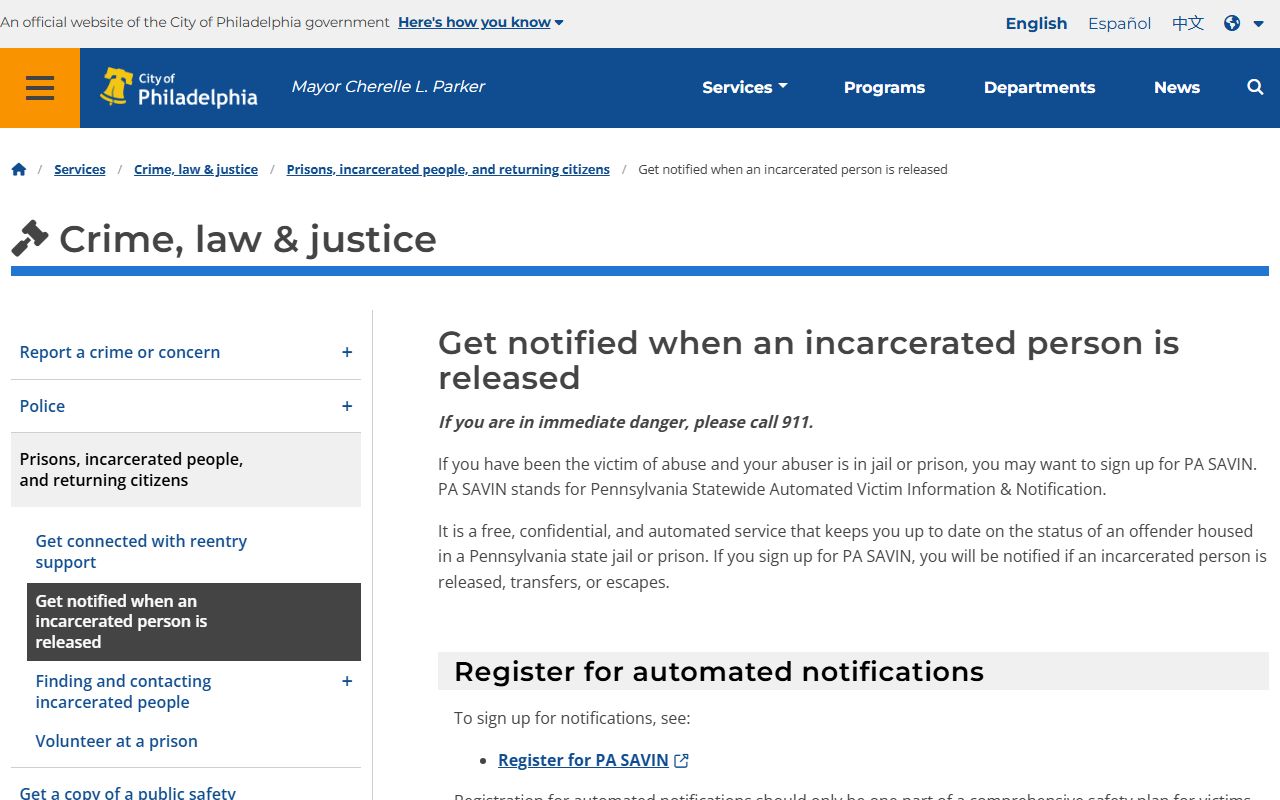
You can choose phone, text, email, or app alerts. For phone calls, the system keeps trying for 24 to 48 hours or until you enter your PIN. The Pennsylvania notification page is shown next.
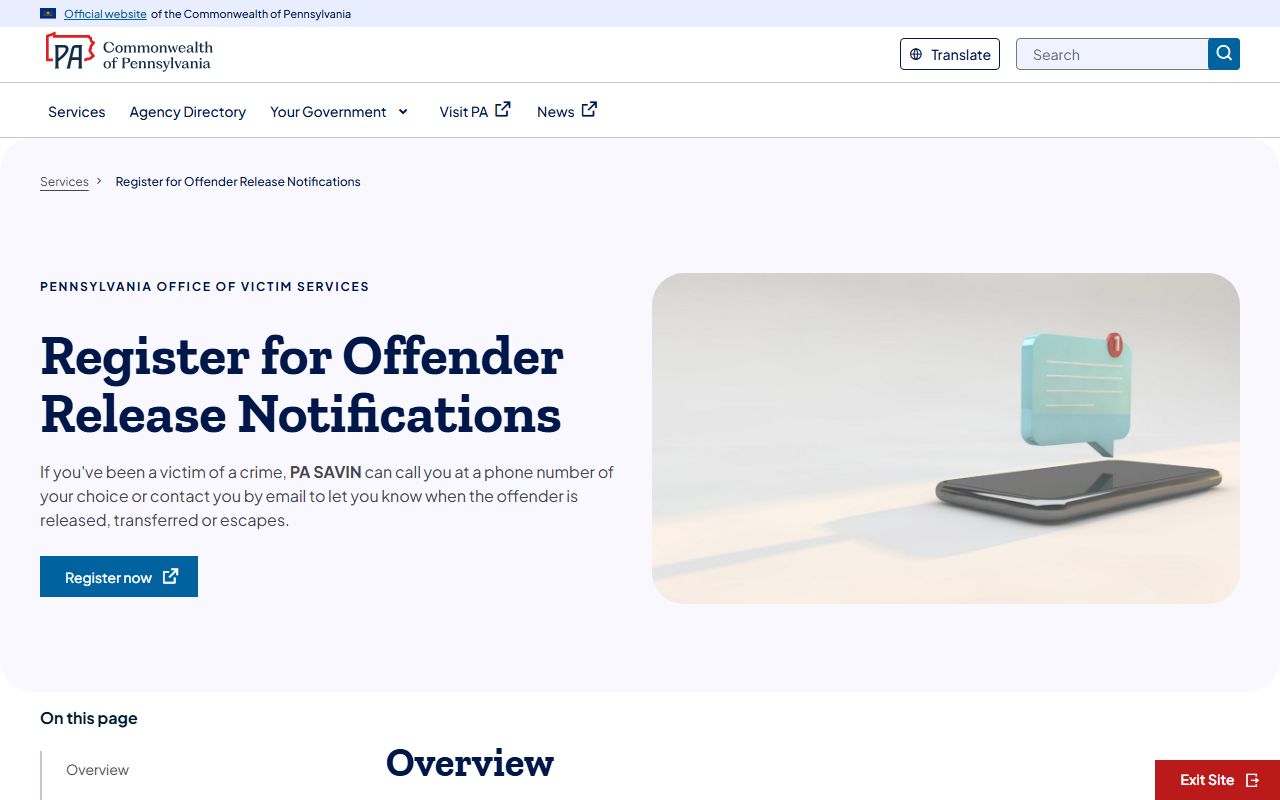
| Field Label | Type | Required | Notes / Format |
|---|---|---|---|
| Offender name | Text | Conditional | Used to locate the custody record |
| ID number | Text | No | If known |
| Facility / state | Dropdown | No | County jail, state prison, or parole coverage |
| Notification method | Checkbox | Yes | Phone, text, email, or app alerts |
| PIN | Numeric | Conditional | Required for phone notifications |
A notification is not the same as an official custody record, but it is the official safety-notification channel for victims and concerned family members. Registration is simple and free, and it does not require a lawyer. The big advantage over a manual locator check is that the system watches the record for you, so a release, transfer, or escape triggers an alert without you having to remember to look. For victims of crime in particular, this is the path that Pennsylvania and the City point to first, because it is built for safety rather than general record research.
Searching State and Federal Released Inmates
County custody is only part of the picture. People sentenced to a state term move to the Pennsylvania Department of Corrections, which runs its own inmate and parolee locator. You can search by last name or inmate number, and the state advises turning off any pop-up blocker. The state locator is shown below.
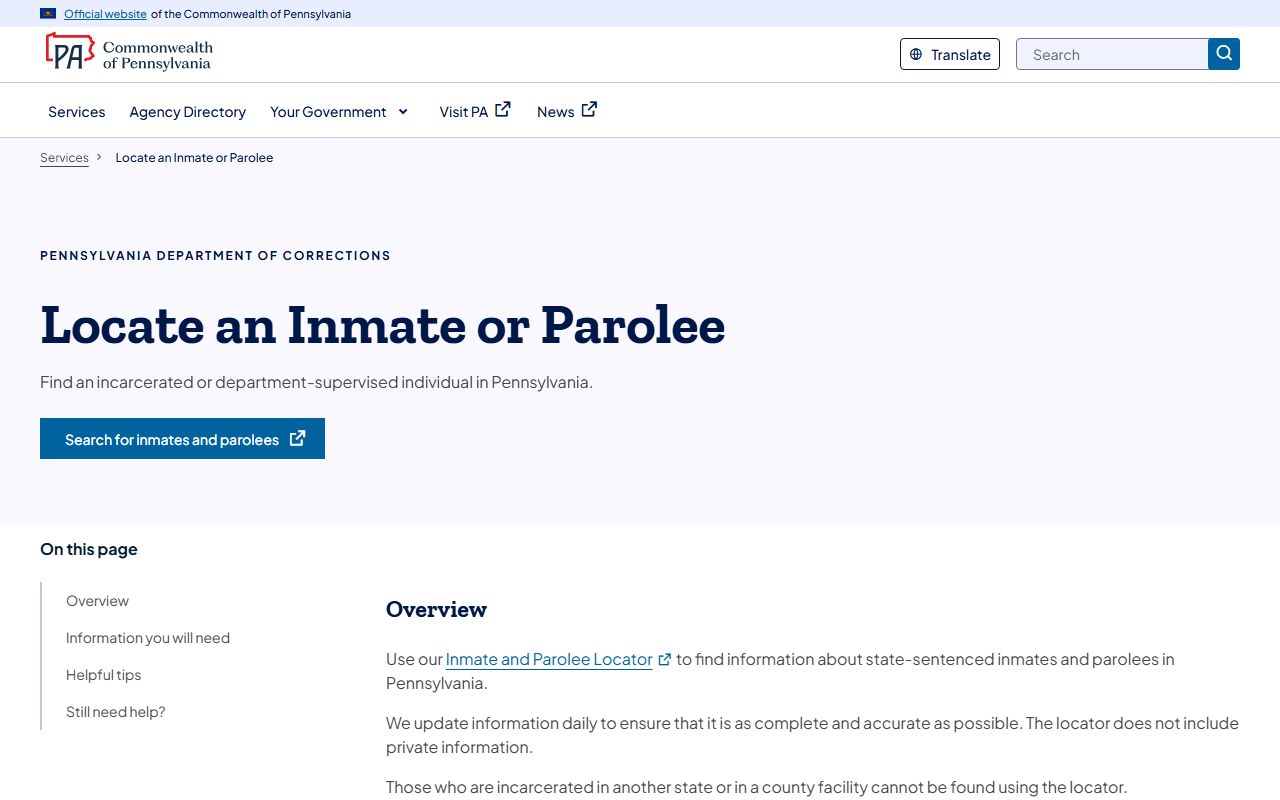
| Field Label | Type | Required | Notes / Format |
|---|---|---|---|
| Last name | Text | Conditional | Search by last name or inmate number |
| Inmate number | Text | Conditional | Alternative to last name |
| First name | Text | No | Helpful for common last names |
| Search | Button | n/a | Searches state-sentenced inmates and parolees |
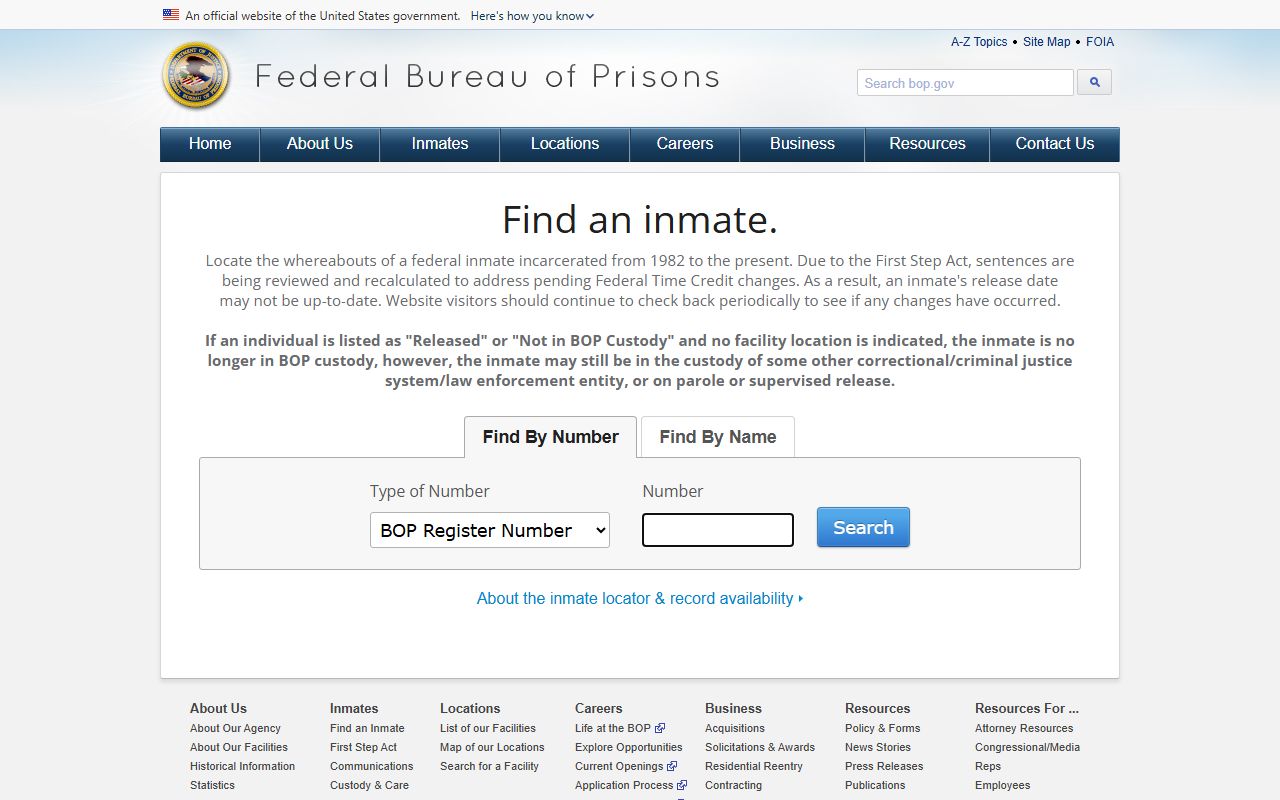
Federal custody uses the Bureau of Prisons inmate locator, which searches by number or by name. Its fields are below.
| Field Label | Type | Required | Notes / Format |
|---|---|---|---|
| Find by number | Tab | No | BOP register, DCDC, FBI, or INS number |
| Find by name | Tab | No | First, middle, last, race, age, sex |
| Search | Button | n/a | Runs the federal custody search |
The federal BOP locator is shown below.
Match the tool to the custody level, since a county search will never return a state or federal inmate, and a federal search will never return a county one.
Verifying Release in Person or By Phone
Online tools are a starting point, not the last word. To confirm a release, call the Department of Prisons 24-hour information lines at 215-685-8394, 215-685-8395, or 215-685-8396, with Spanish service at 215-685-8692. The Office of Community Justice and Outreach can help with other details at 215-685-7288, 215-685-7711, and 215-685-8909. A phone call is often the fastest way to settle a question the locator leaves open, such as whether a person was released, transferred, or moved within the system. Have the full name and date of birth ready so staff can find the record, and ask specifically whether any detainer or hold remains, since that detail changes whether a release is complete.
At release, the Department of Prisons cashier's office is open 24 hours for personal effects, and friends or family can collect belongings during the listed process. Release timing depends on the case and custody status, so a court order does not always mean an instant release. Paperwork, transport, and any outstanding detainer can all add hours or days. If a person seems to have left county custody but you cannot confirm where they went, the most likely answers are release to the community, release to supervision, or transfer to state custody after sentencing. The phone lines and the state locator together usually resolve which one it is.
The Sex Offender Registry After Release
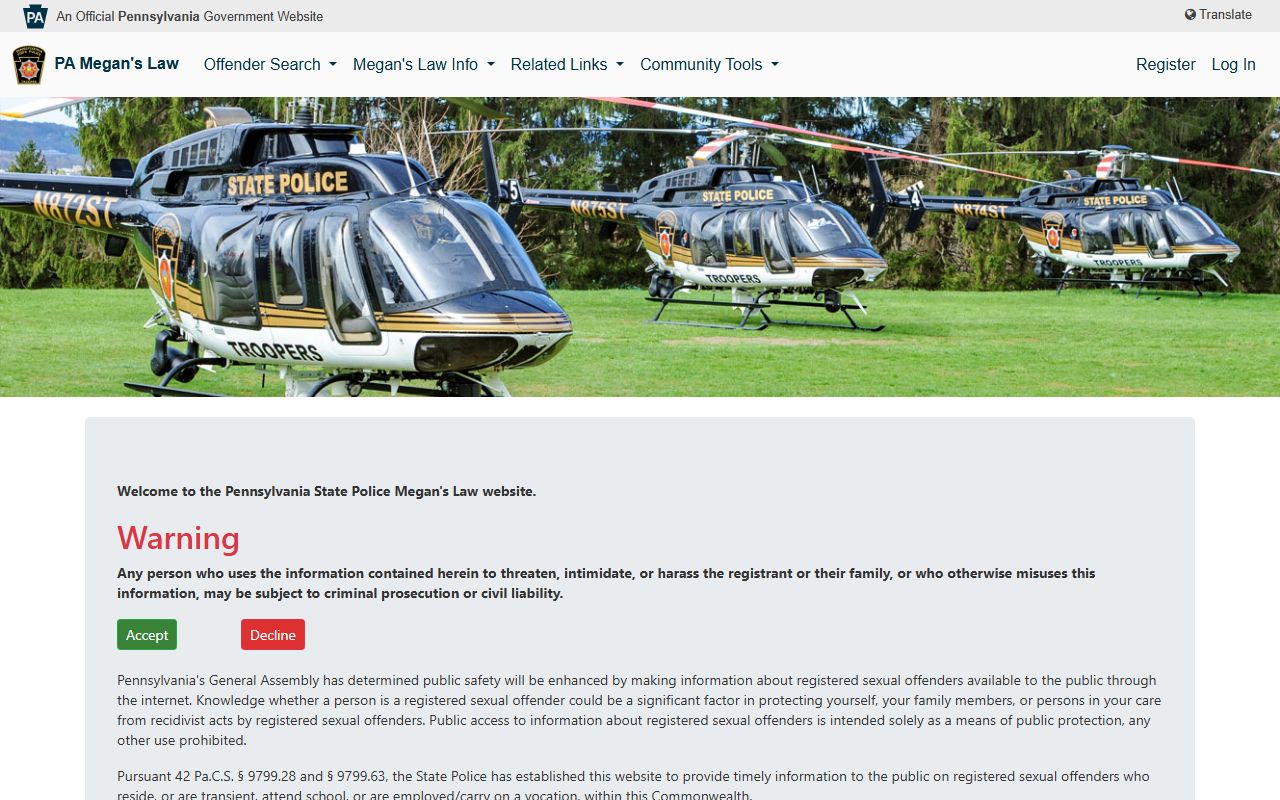
Some people must register after release, and Pennsylvania publishes that information through the Megan's Law registry. The registry is public and lets you search by name, county, or location. A registrant profile can include a photo, the offense and statute, a tier or status, and a residence area where allowed. The registry search is shown below.
| Field Label | Type | Required | Notes / Format |
|---|---|---|---|
| Name | Text | No | Search a registrant by name |
| County | Dropdown | No | Select Philadelphia |
| Municipality / ZIP | Text | No | Geographic search |
| Address radius | Dropdown | No | Radius search where available |
| Search | Button | n/a | Returns matching registrants |
Parole and Probation Information
Release does not always mean the case is over. Many people leave custody on parole or probation, which carries supervision and conditions. State parole status can appear in the Pennsylvania Department of Corrections locator, since the agency oversees state parole. County probation and parole detainers are also a major reason people remain in custody, so a person may be released on one matter while a detainer holds them on another.
Supervision also shapes what a "release" record looks like. A person on parole or probation is out of a cell but still under court or board authority, and a violation can return them to custody. The Pennsylvania population reports show how often probation detainers and other holds keep people in jail, which is why a release on one case does not always end the custody story. Anyone tracking a release for safety reasons should pair the locator check with a notification registration so a return to custody also triggers an alert.
Note: A detainer can keep a person in custody even after a release on the main charge, so confirm all holds before assuming a full release.
Reentry Resources in Philadelphia County
Philadelphia puts real weight behind reentry. The Department of Prisons emphasizes workforce development, behavioral health, substance-use treatment, and a discharge packet with contact information for helpful organizations. All incarcerated people receive a prescription for naloxone upon release. The City Office of Reentry Partnerships serves people affected by the criminal legal system, and several legal aid groups handle the barriers that follow a record.
City Office of Reentry Partnerships
City of Philadelphia
Philadelphia, PA 19107
Reentry support and referrals
Defender Association of Philadelphia
Indigent defense and records help
Philadelphia, PA
Expungement and reentry legal aid
Community Legal Services, Philadelphia Legal Assistance, Philadelphia VIP, and the SeniorLAW Center round out the local help for housing, employment, benefits, and record-clearing. These barriers are real and often overlap. A record can block a job, a lease, or a professional license, and a returning resident may face all three at once. Legal aid groups can help with expungement and limited-access petitions, while reentry programs connect people to workforce training, behavioral health care, and substance-use treatment. The discharge packet from the Department of Prisons is a good first reference, because it lists organizations useful to people leaving custody.
Civil Rights and Record-Clearing After Release
After release, people often want to clear an eligible record to remove barriers to work and housing. Pennsylvania offers expungement and limited access, but not every case qualifies, and the rules turn on the conviction type and sentence completion. Nonconvictions, set cases, and pardons follow different paths than convictions, and unpaid court costs can block a petition. For the eligibility framework and the petition path under 18 Pa.C.S. and the criminal rules, see Philadelphia County arrest records. Legal aid groups can review a specific docket and advise on the best route, and the Defender Association handles many of these matters for people who cannot afford a private lawyer.